Budva or Kotor: where to stay in Montenegro
 Mykyta Dzhus · Updated 2026-10-20 · 3 min read · Where to go
Budva and Kotor are the most popular towns on the Montenegrin coast, only half an hour apart. But the holidays are different: Budva means beaches and nightlife, Kotor a medieval town in one of the most beautiful bays of the Adriatic.
Contents
In short
- Budva: for beach holidays. Several beaches nearby, a promenade, restaurants and nightlife, an old town on a peninsula.
- Kotor: for views and history. A UNESCO-listed old town, a fortress above the bay, quieter evenings, but no big beaches.
- Distance: about 21 km, roughly half an hour by bus or taxi, so you can stay in one and visit the other.
Getting there
The nearest airport is Tivat (TIV): about 7 km to Kotor and about 20 km to Budva. Podgorica (TGD) airport is further, over an hour's drive to the coast. Buses run frequently between the coastal towns. Many people also fly into Dubrovnik in Croatia, about two hours from Kotor including the border crossing.
Kotor: the old town and the fortress
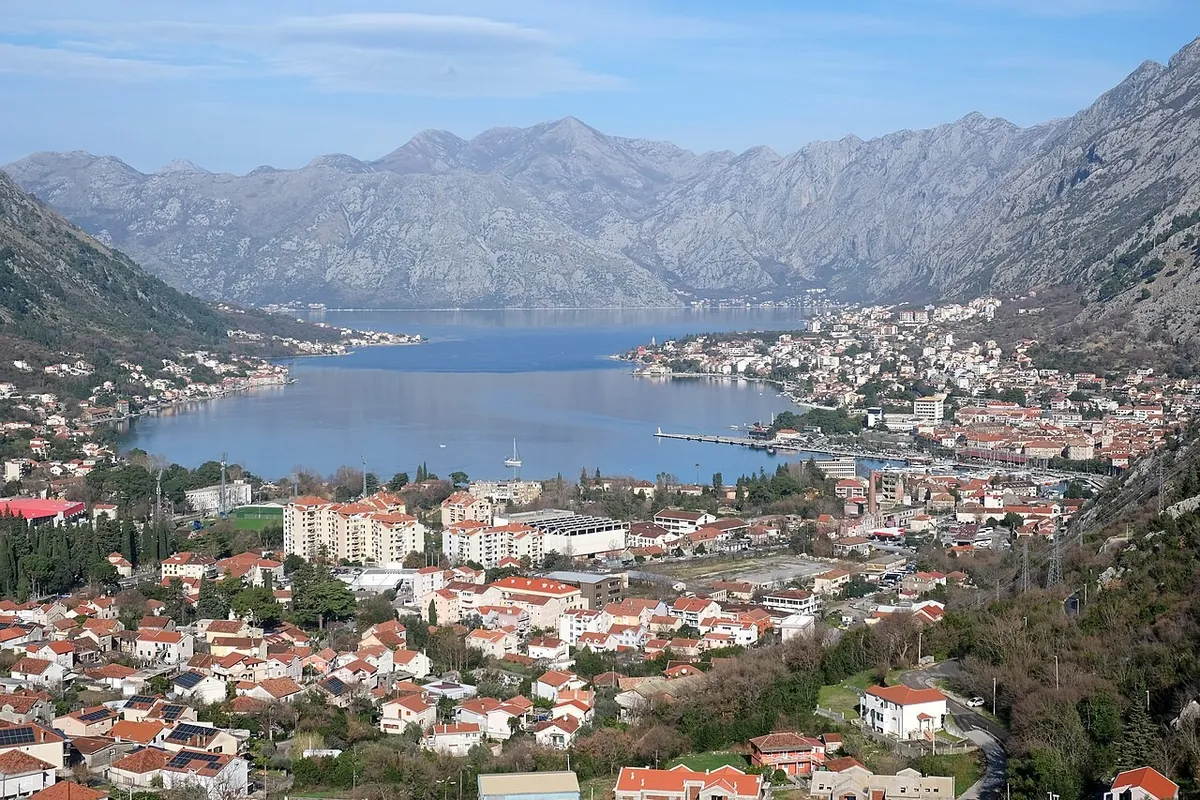
Kotor's old town is a maze of stone lanes, squares and churches behind sturdy walls at the foot of a mountain. The bay and the town are on the UNESCO list together. The best view is from the St John's Fortress (San Giovanni): about 1,350 steps and 280 metres of climbing, with an entry fee. Go early in the morning or before sunset, as the slope is hot in the middle of the day.
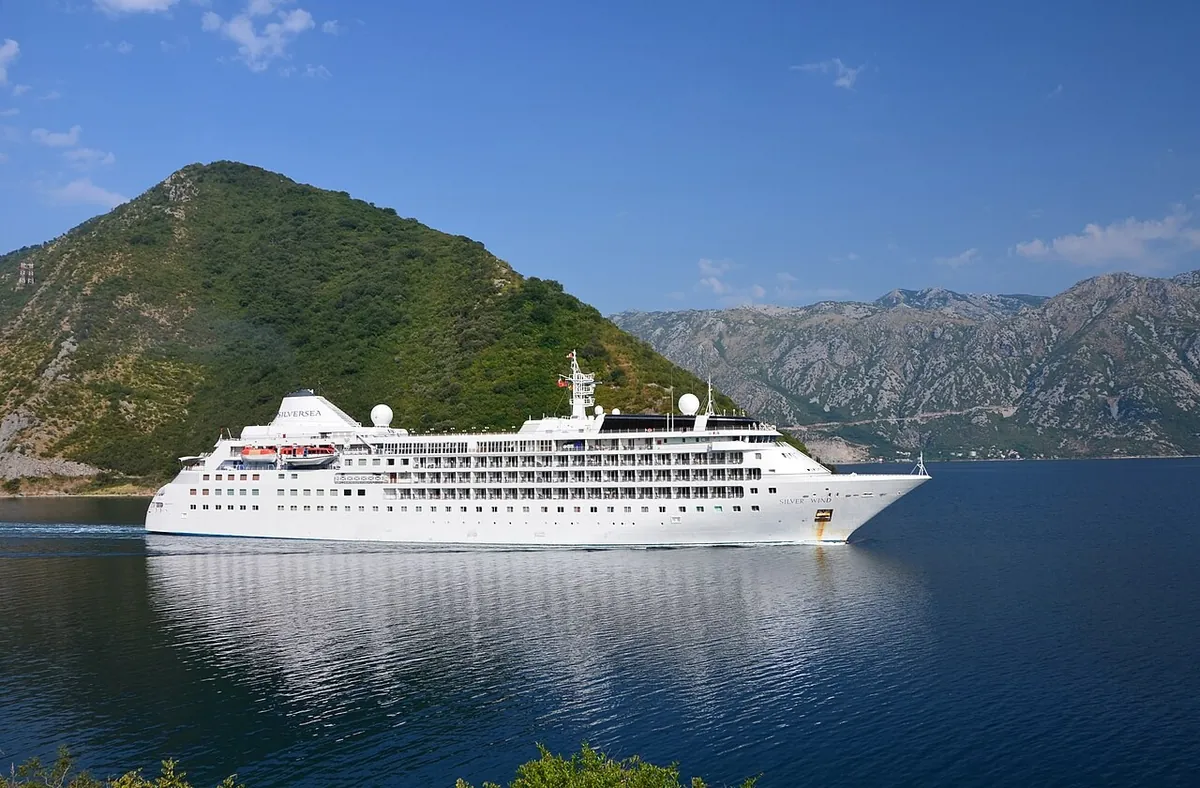
In summer cruise ships call into the bay every day, and the old town is very crowded during the day. In the evening, when the passengers return to their ships, Kotor calms down again.
Budva: beaches and the old town
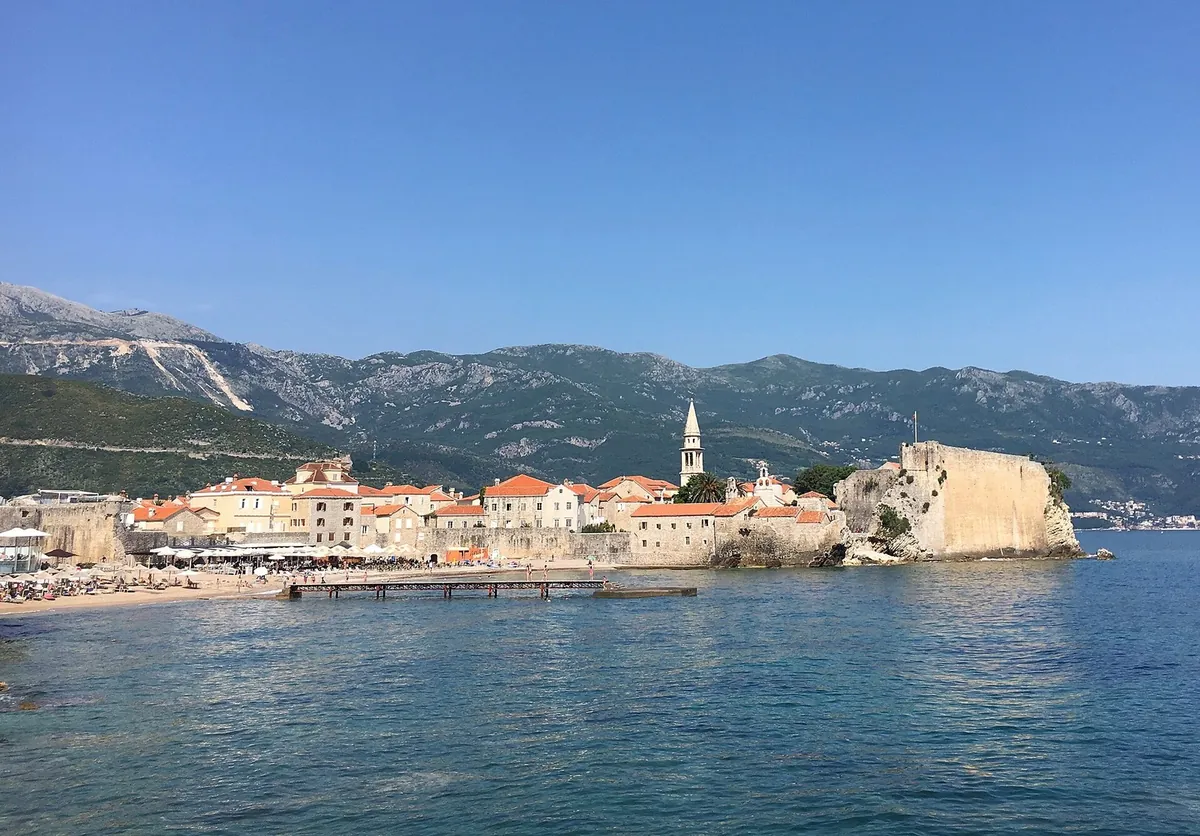
Budva's old town sits on a peninsula: walls, a citadel and narrow lanes with cafés. Next to it are the town beaches: Slovenska along the promenade, small and picturesque Mogren behind the rock, and long Jaz a little further. Budva is the centre of Montenegrin nightlife.
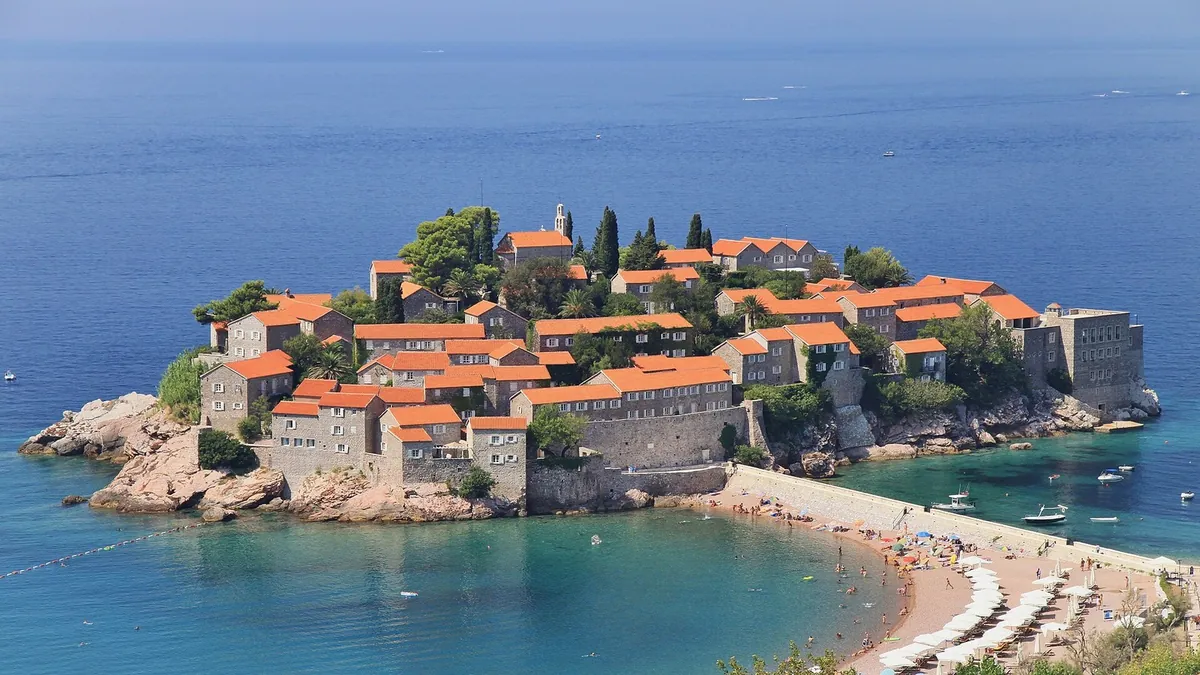
A few kilometres from Budva is Sveti Stefan, an islet hotel linked to the shore by a narrow isthmus. The island itself is a private resort, but the beach and the view of it are open to all. For something quieter, try nearby Bečići and Petrovac.
What to see nearby
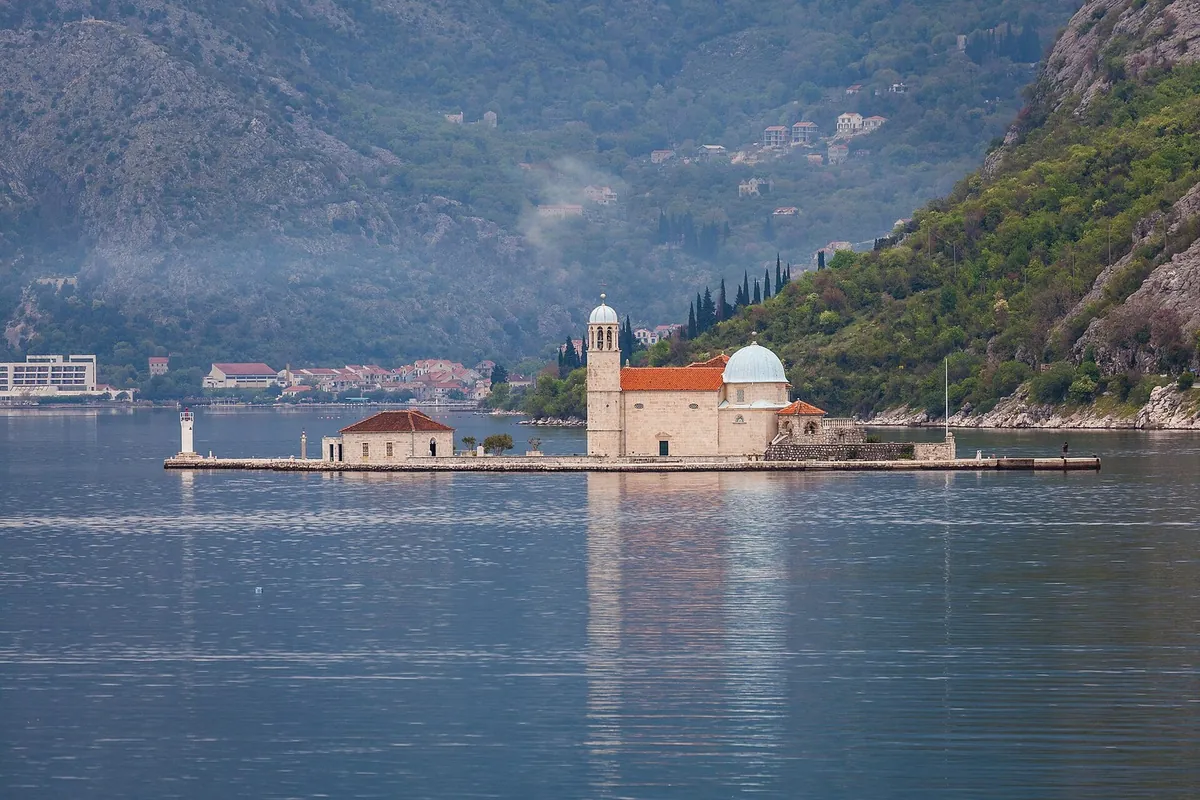
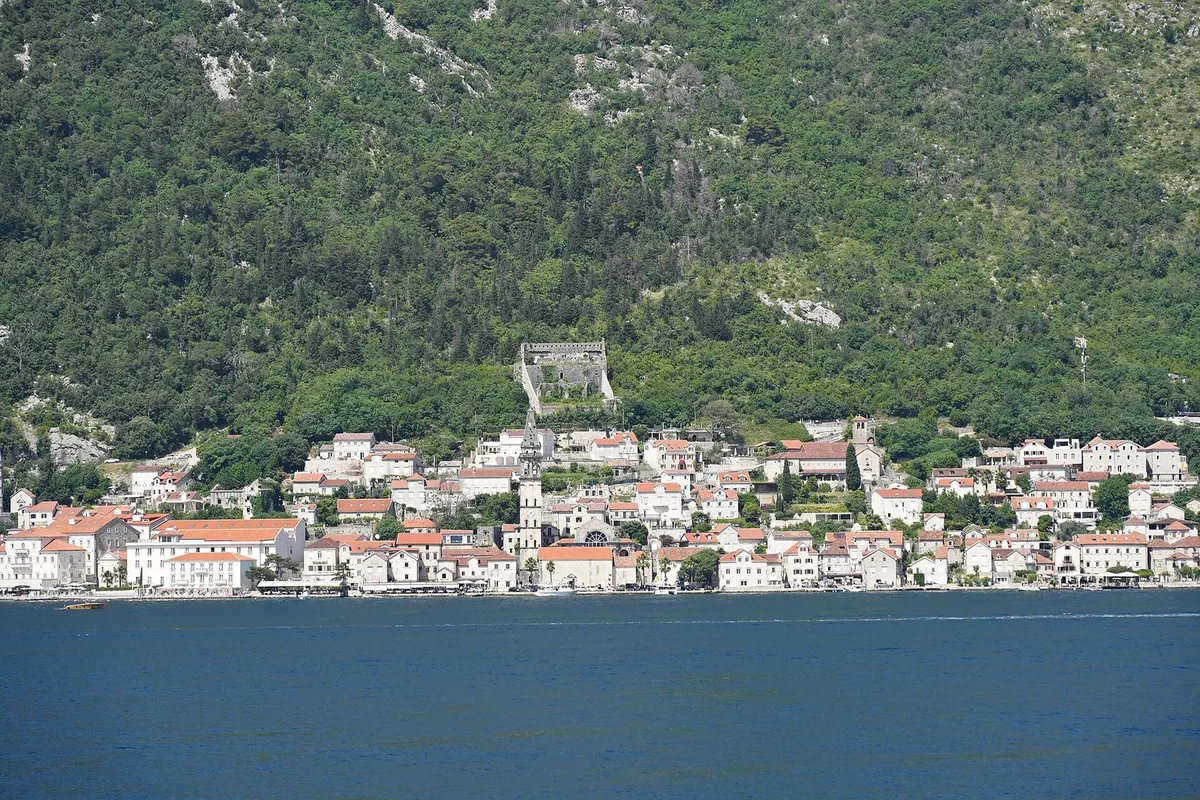
- Perast: a small baroque town on the Bay of Kotor. From there, boats go to the islet of Our Lady of the Rocks with its church.
- Lovćen: the national park above Kotor, with a serpentine road overlooking the bay and the Njegoš Mausoleum on the summit.
- Lake Skadar: the largest lake in the Balkans, with boat trips among water lilies.
- Ostrog Monastery, built into a cliff, one of the region's best-known pilgrimage sites.
How to choose
- Beach every day and parties: Budva.
- Photos, history, quiet evenings: Kotor or Perast.
- With children: Bečići or Petrovac, with longer beaches and less bustle.
- Without a car: Budva or Kotor, both well connected by bus.
When to go
The swimming season runs from June to September; July and August are the hottest and busiest. May, September and October are the best time for walking the old towns and climbing to the fortress without the heat.
What to book ahead
- Boat trip on the Bay of Kotor: Perast, the Blue Cave.
Links to 12Go, GetYourGuide and Klook are partner links: the price for you is the same, and a small commission helps us run this blog.
Money and staying connected
Montenegro uses the euro, even though it isn't in the EU. That's exactly why EU roam-like-at-home rules don't apply there: roaming is charged according to your operator's own rates. To have data for maps, taxis and tickets, install a travel eSIM: Montenegro starts at $3.49, 5 GB for 30 days is $10.49, a week of unlimited is $29.49.
FAQ
Which is better for a beach holiday, Budva or Kotor?
Budva: it has several beaches close by. Kotor has no big beaches, but it has a UNESCO old town and a fortress.
How far is it from Budva to Kotor?
About 21 km, roughly half an hour by bus or taxi.
Which airport is closest?
Tivat (TIV): about 7 km to Kotor and 20 km to Budva.
How many steps are there to Kotor's fortress?
About 1,350 steps and 280 metres of climbing; there's an entry fee.
Does EU roaming work in Montenegro?
No, Montenegro isn't in the EU, even though it uses the euro; roaming is charged at your operator's rates.
I got tired of overpaying for SIM cards that didn't work and of searching for where to go next. So I built this site: travel guides and an eSIM that just works.

Need data on your trip?
An eSIM for 198 countries in a minute — no roaming, no paperwork.
Pick a countryPopular destinations
More articles
What to do after landing in Hurghada: the $30 visa in 2026 and where to buy it, taxi prices to your hotel, Uber, Careem or inDrive, money, tipping and common scams.
5 min read · Read →
Getting from Dubai Airport (DXB) in 2026: taxis from AED 25, the metro from Terminals 1 and 3, the Nol card, Uber and Careem, Salik, visa rules and what to know about data and WhatsApp calls.
4 min read · Read →
Where to go in Thailand from November to March: Phuket, Krabi, the Trang islands and Lipe, Samui, Chiang Mai. Weather by month, the 30-day visa exemption from 15 September 2026, TDAC, money, and our data test on Ko Muk.
4 min read · Read →
A full passenger guide: what to do at the airport, when you are owed €250–600 under EU261, the rules in Turkey, Thailand, the UAE and the US, what the 2026 EU261 reform changes, how to claim yourself and whether paying AirHelp or Compensair 30–35% is worth it.
12 min read · Read →
A big guide to Thailand's islands: Phuket, Phi Phi, Koh Lanta, the Trang islands, Koh Lipe, Koh Samui, Koh Phangan and Koh Tao. Ferry and speedboat prices in baht, when boats stop running, where to buy tickets, monkeys and jellyfish, scams, food and mobile data. With our own experience on Koh Muk.
10 min read · Read →
Getting from Istanbul and Antalya airports: 2026 taxi tariff, BiTaksi, Uber or iTaksi (no Bolt rides), Havaist and the metro, card or cash, bridge tolls and common scams.
5 min read · Read →